Early intervention speech therapy is a specialized service for infants and toddlers who are not meeting expected speech and language milestones. It supports children, typically from birth to age 3, who are experiencing delays in communication, understanding, and social interaction. During this age window, the brain develops at an extraordinary pace, forming up to one million new neural connections per second. These young, developing brains are exceptionally adaptable to targeted support to help overcome difficulties. Families who begin speech therapy early can help strengthen foundational communication skills and improve long-term outcomes in a supportive and nurturing way.
In this blog, we’re exploring early intervention speech therapy, why it’s important, and how it helps children struggling with speech and communication during developmental years. We’re also sharing signs to look for, as well as techniques and activities common in early childhood intervention speech therapy services.
What Is Early Intervention Speech Therapy?
Early intervention speech therapy focuses on young children, typically aged 0-3 but sometimes up to 5, who are having trouble with speech, language, and communication development. It’s different from school-aged therapy, as it builds the foundation for communication during a critical period of brain development, rather than focusing on skills that support learning and classroom participation. As we mentioned, children have still-developing brains during this stage of life, which is why early intervention is so valuable. Research1 indicates that starting therapy early, during a period of high brain neuroplasticity, can significantly improve long-term communication and social outcomes.
Why Early Intervention Speech Therapy Is Important
The importance of early intervention speech therapy cannot be understated. Young brains are highly adaptable in the first few years of life. During this window, their little brains can quickly form and strengthen new connections in response to experiences. It’s also the stage when core communication pathways are being built. Because the brain is rapidly wiring and rewiring itself based on what a child hears, sees, and practices, targeted early intervention speech therapy can have a lasting impact by building foundational communication skills.
Signs to Look Out For
It’s common for parents to wonder if they should be worried when their child isn’t meeting speech, language, and communication goals as expected. However, all children develop differently, some faster and others a little slower. Therefore, it’s important to recognize the early signs of speech and language delays in children to help determine if early intervention and speech therapy are needed. The following are some signs to look for.
Speech Delay Signs
- Limited babbling as an infant
- Not saying single words by 16 months
- Using fewer words than peers of the same age
- Not combining two words together by age 2
- Speech that is very difficult to understand, even for parents
- Leaving out sounds in words beyond what is typical for the age
- Stuttering that persists or worsens over time
- A sudden loss of words that were previously used
Language and Communication Concerns
- Difficulty understanding simple directions
- Not responding consistently to their name
- Limited eye contact or joint attention
- Rarely pointing to show interest or share experiences
- Limited back-and-forth interaction during play
- Difficulty answering simple questions
- Trouble expressing wants and needs clearly
- Frequent frustration, tantrums, or withdrawal related to communication
Early Intervention Speech Therapy for Autism and Developmental Delays

For children with developmental challenges, such as autism spectrum disorder, global developmental delay, Down syndrome, or those born prematurely, early intervention speech and language therapy can be especially beneficial. In these cases, support is tailored to each child’s unique needs. Pediatric speech-language pathologists (SLPs) focus on building communication, social interaction, and language skills in ways that fit their individual strengths and challenges.
For autistic children, early intervention autism speech therapy may focus on understanding and using language, gestures, and social cues. In cases of developmental delays or genetic conditions such as Down syndrome, early intervention can help them reach early speech and language milestones, as well as strengthen play and interaction skills.
Early Intervention Speech Therapy Goals
Early intervention speech therapy goals are set by an SLP who works closely with your child and family. The SLP will observe the child’s current skills to understand their strengths and challenges, and listen to what parents hope to see in daily communication. This process ensures that therapy is tailored to each child’s unique needs.
Common Speech and Language Goals
- Expressive Language: expressing needs, thoughts, and feelings with words, gestures, and sounds.
- Receptive Language: a better understanding of what others are saying.
- Speech Clarity and Sound Development: improving speech sounds for better comprehension by family and peers.
- Social Communication: improving interaction with others, e.g., taking turns, making eye contact, sharing interests, and understanding social cues.
Early Intervention Speech Therapy Activities
When children are very young, it’s not always easy to hold their attention long enough to teach, making it challenging to learn new skills. Therefore, SLPs incorporate fun, engaging early intervention speech therapy activities. These evidence-based strategies focus on play, interaction, and everyday routines to capture and keep the attention of young, active minds.
Play-Based Speech Therapy Activities
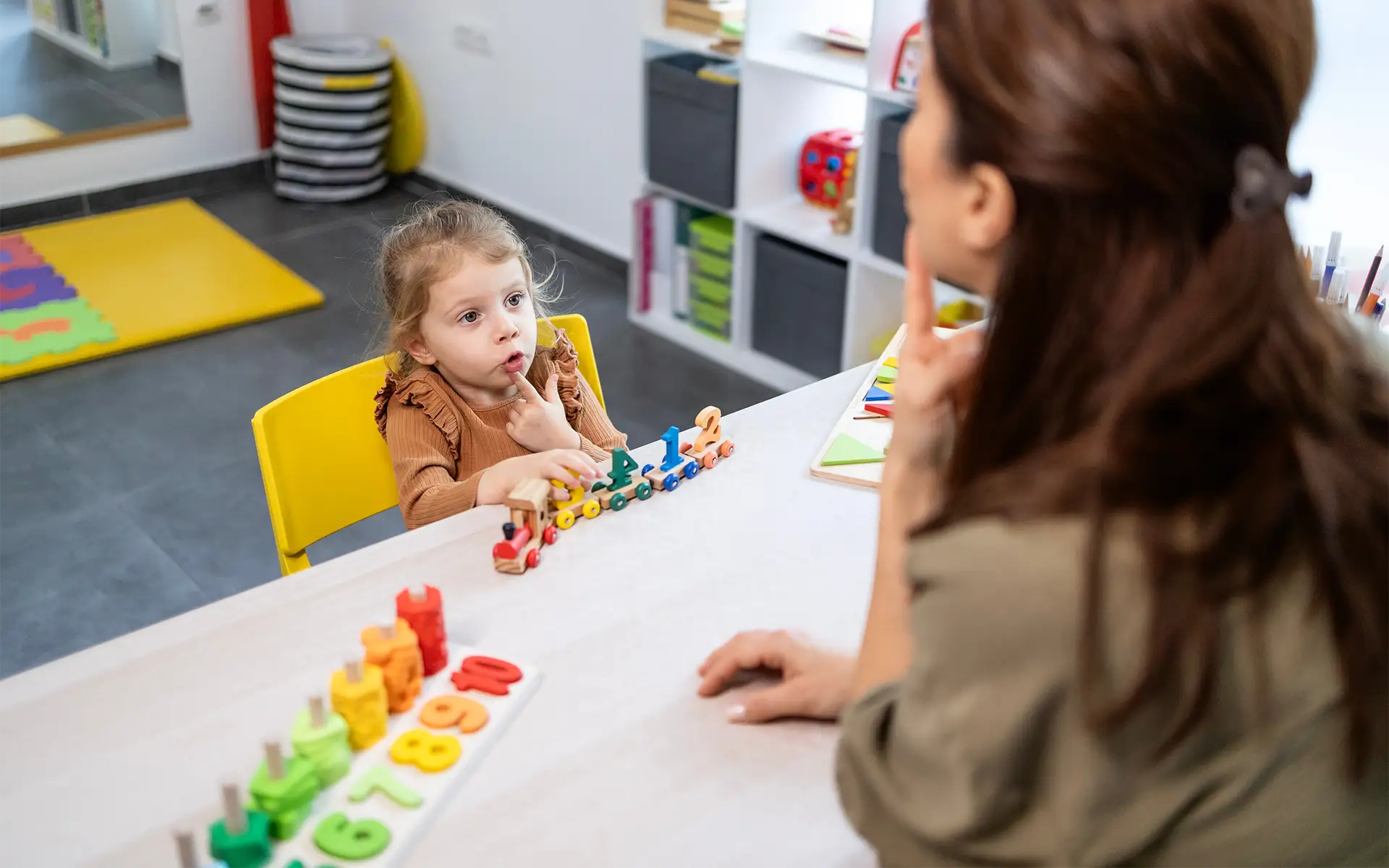
These early intervention speech therapy activities focus on play using games, songs, toys, shared play, and daily routines. SLPs may use interactive strategies, such as matching activities or turn-taking games, to encourage asking for help, naming objects, and following directions. To practice sound patterns and vocabulary, they may incorporate singing nursery rhymes together. Activities can also incorporate daily routines, such as hand washing or dressing, to link language learning to real-life skills. The goal of these activities is to engage children through fun, meaningful play while strengthening specific speech, language, and social communication skills.
Home-Based Speech Therapy Activities for Parents
Outside of play-based therapies with SLPs, parents can help improve communication by engaging in home activities centered on the child’s everyday life and routines. Therapists often provide guidance on speech delay support strategies, including sign language as an alternative means of communication, while they work on developing verbal speech skills. The goal is to turn everyday moments into opportunities for growth and confidence in communication. Some parent-led, home-based early intervention speech therapy activities include practicing naming objects during mealtime, reading picture books together, and narrating actions during play or daily chores.
Early Intervention Speech Therapy Techniques

These techniques focus on how children learn to communicate, not just what skills they are working on. Pediatric SLPs use a variety of approaches to help children build language, speech, and social communication skills in ways that feel natural and engaging. The reason their therapy techniques are hands-on and interactive, typically involving play and daily routines, is to help children practice skills in engaging, real-life situations. Parents are often included in sessions to learn strategies that reinforce progress throughout the day.
Evidence-Based Therapy Approaches
These early intervention speech therapy techniques work together to make therapy personalized, practical, and supportive. They help children progress at their own pace while keeping families actively involved in their communication growth. These techniques involve modeling, repetition, parent coaching, and naturalistic therapy.
- Modeling is when the therapist or parent demonstrates words, gestures, or phrases for the child to imitate.
- Repetition involves practicing language and communication skills multiple times through fun, varied activities to help children retain and generalize language.
- With parent coaching, therapists guide and coach parents on ways to embed communication practice into everyday routines for consistent and natural learning.
- Naturalistic therapy involves children practicing language in real-life situations, such as snack time or bath time, learning to communicate meaningfully through gestures, words, and social cues.
How Early Childhood Speech Therapy Works
For many parents, coming to terms with the possibility that something in their child’s development may need extra support is often the hardest step. The good news is that recognizing these challenges early and seeking help is a positive and proactive decision. Early childhood speech therapy provides a supportive path forward, helping families better understand their child’s communication needs.
Evaluation and Assessment
The process typically begins with a professional evaluation. During your child’s assessment, a licensed pediatric SLP will observe how your child communicates through play, interaction, and simple activities. They may look at skills like understanding language, using words or sounds, responding to others, and social engagement.
The evaluation also includes conversations with parents about developmental history, communication concerns, and daily routines. Gathering this information gives the therapist a clear picture of your child’s strengths and areas where additional support may be helpful. The goal of the assessment isn’t to assign labels. It’s a process for better understanding how they communicate and identifying how development can best be supported.
Individualized Treatment Plans
Post evaluation, the SLP develops an individualized treatment plan based on where your child is and what they need to progress. These plans include clear, goal-based targets such as improving language comprehension, increasing vocabulary, strengthening social communication, or helping them express needs more effectively.
Early intervention speech therapy plans are flexible and evolve as your child grows and develops new skills. Therapists involve parents by sharing strategies that can be used outside of therapy sessions, helping reinforce progress during everyday activities. This collaborative approach creates consistent opportunities for your child to practice and strengthen what they are learning.
The Role of Parents in Early Intervention Speech Therapy
At this age, children learn best through consistency and repetition. Therefore, involving parents in early intervention speech therapy ensures that children consistently practice skills acquired in therapy sessions throughout their daily routines. This collaborative approach reinforces therapy during familiar activities, making the process feel familiar.
The speech therapist guides and supports parents throughout the process by demonstrating techniques, modeling language, and suggesting ways to encourage communication at home. These strategies may include narrating activities, offering choices, modeling simple words or gestures, and creating opportunities for the child to respond. It’s important to remember that parents aren’t expected to act as therapists. The goal is to empower families by giving them practical tools for practicing communication that feel natural and supportive.
Accessing Early Intervention Speech Therapy Services
Recognizing early signs of a delay in communication development can be an important first step toward getting the support you need. When families are ready to explore early childhood intervention speech therapy, there are several ways to begin the process. Many begin by speaking with their child’s pediatrician, who can help determine whether a speech and language evaluation may be beneficial.
Another option is through state-funded early intervention programs designed to assist young children with developmental delays. After a referral, the child typically receives an evaluation to determine eligibility for services and identify areas where support may be helpful.
Many families also choose to pursue private speech therapy services. Private providers offer evaluations, individualized therapy plans, and flexible scheduling options. These organizations, such as KidsCare Home Health, work closely with families to deliver speech therapy in comfortable, familiar settings, helping children build communication skills while supporting language development throughout everyday routines.
Contact KidsCare Home Health
If you have questions about your child’s communication development, early support can make a true difference. Contact KidsCare Home Health to learn more about early intervention speech therapy services that can help your child thrive.