If you watch children play and interact with their surroundings, there is a particular skill hard at work: hand-eye coordination. This foundational skill is integral to everyday activities for children and adults, such as getting dressed, brushing teeth, writing and typing, and playing sports. In this article, we’re explaining what eye hand coordination is, its significance in child development, expected milestones, activities that strengthen this skill, and more.
What Is Hand-Eye Coordination?
Despite its importance in development, we typically only hear hand eye coordination discussed in terms of sports. However, it’s so much more than just “keeping your eye on the ball”. From very early on, babies learn, practice, and develop this essential core component of motor skill development.
Eye hand coordination is the synthesis of visual and motor skills, i.e., how our eyes, brain, and hands work together. It’s the ability to process what we see and use this information to guide hand movements to complete an action. For example, eye-hand coordination is hard at work when eating cereal with a spoon. The eyes see the spoon, the brain processes that visual cue and sends instructions to the hands on how to interact with it, and the hands respond by picking it up. Although acting on visual cues may feel automatic, it’s actually a quite complex cognitive ability.
Why Hand Coordination Is Important
The use of hand coordination in daily tasks is ever-present. They support how we move and interact with our environment. From infants to adults, this skill impacts overall development, performance, and independence.
In early childhood, eye hand coordination is integral to essential motor skills development, helping little ones master both fine and gross movements. Studies1 have linked strong coordination with academic performance, particularly in reading, writing, and math. It also helps children with physical activities, from play to sports, such as building with blocks or catching a ball. Strengthening hand-eye coordination during development can also help children gain confidence and become more independent with daily tasks like dressing and feeding themselves.
As children grow older, hand-eye coordination is integral to learning more advanced skills such as driving, typing, shopping, and problem-solving. It makes many of the tasks we may take for granted possible. These skills also support cognitive development, as the eyes, brain, and upper extremities work together to perform coordinated movements. As with any cognitive activity, hand-eye coordination can be improved with practice. The more we engage in activities that require precision and control, the more refined these skills can become. As they say, practice makes perfect!
Hand-Eye Coordination Development

The development of hand-eye coordination begins in infancy and progresses as children grow and interact with their environment, with general developmental guidelines by age. However, it’s important to remember that every child is different and may reach coordination milestones earlier or later than their peers. If your child is not meeting one or all of these as expected, don’t panic. Discuss your observations with your pediatrician, who can help you evaluate and understand your child’s progress.
Infants (0–12 Months)
Within the first 12 months of a baby’s life, their hand-eye coordination is in the early stages of development. At this stage, infants begin to visually track objects, reach for items, and grasp them. In the first six months, you may notice them seeing an object and reaching to grab it, sometimes passing it between their hands. Between 6 and 12 months, they may begin using a pincer grip with their thumb and forefinger, for example, to feed themselves small finger foods at mealtimes.
Toddlers (1–3 Years)
As the toddler years progress, so does hand eye coordination. At this stage, little ones are exploring, and their coordination becomes more deliberate as they interact with their surroundings. In years 1 to 2, you may notice more precise play, like grabbing objects and stacking or lining them up. Holding items such as eating utensils or a crayon may come easier as well. Toward the end of this stage, toddlers begin to show more control with object handling, such as when playing with balls, turning pages on their own, or drawing simple shapes like circles.
Preschool & School Age (3–5 Years)
Hand-eye coordination continues to progress and improve at pre-school age. Little ones become more adept at holding objects with greater precision, such as utensils during mealtimes and scissors when cutting. Intended placement of objects may improve, and many children begin using writing tools to form letters. At about 5 years and beyond, writing and drawing improve and continue to advance, improving coordination. It’s about this age when children may begin playing more organized sports, which further refines hand-eye coordination.
Common Problems With Hand-Eye Coordination
There are various problems or disorders that may affect the development of coordination skills in children. For example, clear vision is closely related to effective hand-eye coordination. If your child consistently under- or overshoots when reaching for objects, refractive errors, such as myopia (nearsightedness) or hyperopia (farsightedness), may be interfering with the visual information they need to coordinate their movements. Similarly, problems with depth perception can make it hard to gauge distances.
Developmental disorders, such as dyspraxia (Developmental Coordination Disorder) and neurodevelopmental issues, such as Autism spectrum disorder (ASD) and ADHD, can also affect eye hand coordination development. These conditions disrupt the brain’s processing of the visual information to process and execute movements.
It’s not always easy to distinguish between your child just “still learning” a skill and them having trouble for another reason. However, as a parent, you are best positioned to know if something feels off. If there are any concerns, it’s always a good idea to ask your pediatrician, who can help determine if further evaluation is needed.
Best Hand Eye Coordination Activities by Age

Typically, eye hand coordination develops naturally, and children will learn control of their hands as they grow and interact with the world. However, this doesn’t mean that we can’t help them along the way. Play is one of the best ways to help little ones strengthen their skills. Here are some fun hand eye coordination games and activities to try, grouped by age.
Activities for Babies and Toddlers
Eye-hand coordination develops in babies around 4 months, as they start visually tracking objects and reaching for them. For babies and toddlers, activities that focus on sight and touch are great for developing eye hand coordination. Activities that engage these senses can include:
- Tummy Time: Place brightly colored, soft, and textured toys on the mat or blanket during tummy time so they can see and reach for them.
- Rattle Reach: Hold and shake a rattle, bringing it close to them, then a little further away to encourage visual tracking and reach.
- Rolling Balls: Roll a ball back and forth to each other to practice tracking and catching.
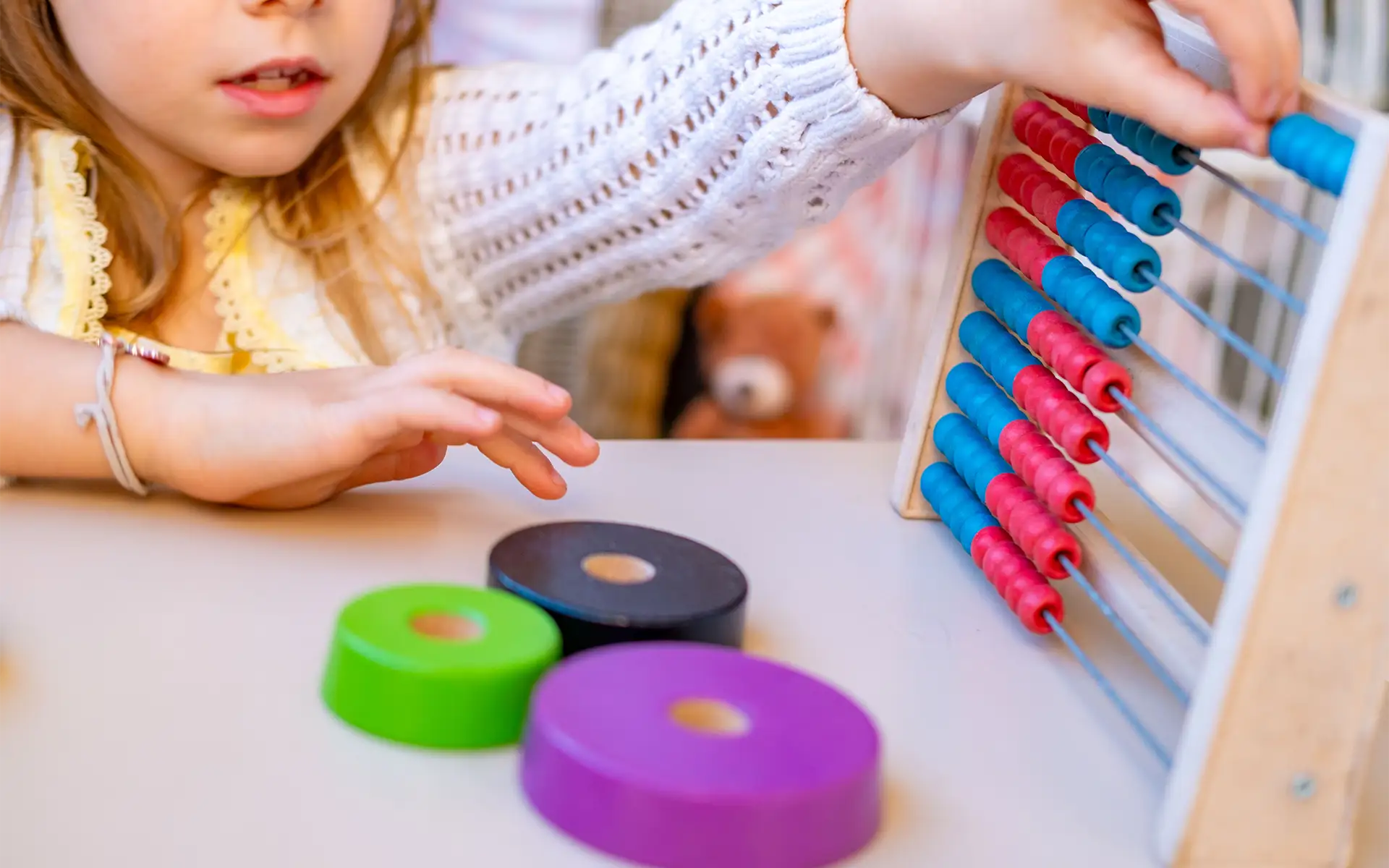
- Stacking Blocks: Provide toy blocks that they can see, pick up, and place.
- Sandbox Play: Provide containers and a spoon in a sandbox, so they can scoop sand into containers.
- Dressing Dolls: Toddlers can dress their doll in clothing.
Activities for Preschoolers and Kids
By preschool, a child’s eye hand coordination advances to more precise movements that often require holding objects, like crayons for drawing. These hand eye coordination activities for kids focus on more precise small object manipulation, visually tracking movement, and using both hands together to accomplish something (like catching). And the good news is that you likely already have the best toys for hand-eye coordination at your fingertips!
- Drawing with crayons
- Cutting and pasting paper
- Bean bag tossing and catching
- Stringing beads
- Making playdough shapes
- Batting at a hanging balloon or ball
- Ball throwing or cornhole toss
- Jigsaw puzzles
- Balloon Keep-Up (batting it to keep it in the air, off the ground)
Remember to act as a guide during play if needed, but let them participate in the process to learn and improve.
These hand-eye coordination activities aren’t just fun – they can help babies, toddlers, and preschoolers strengthen their fine motor skills, gross motor coordination, and cognitive development. They also help with visual processing skills and age-appropriate functioning skills, such as working memory, attention, and sustained play.
It’s important to always remember that every child develops at their own pace, and hand-eye coordination is no exception. With the right balance of play, practice, and support, these skills can continue to grow and strengthen over time. If you have any concerns, speak to your pediatrician, who can help determine if additional evaluation or support is necessary.
As a trusted pediatric in-home care provider, KidsCare Home Health offers compassionate occupational therapy to help children strengthen important skills such as hand-eye coordination. If you have questions or would like to learn more, our team is here to help.
Contact KidsCare Home Health Today
Frequently Asked Questions
How can I improve hand-eye coordination?
For children, hand-eye coordination improves through regular play and practice. Activities that require connecting what they see with how they move can help, such as stacking blocks, stringing beads, or tossing a ball back and forth.
What are the best hand-eye coordination activities for kids?
The best activities encourage children to use their eyes and hands together in fun, engaging ways, such as playing catch, cutting and pasting, drawing or coloring, completing puzzles, stacking objects, and simple ball rolling games.
What causes poor hand-eye coordination?
In general, vision issues, delayed motor skill development, or neurological factors can impact eye hand coordination development in children. It’s always best to discuss any concerns with your pediatrician.
What are simple exercises to improve hand-eye coordination at home?
To build eye hand coordination naturally through repetition and play, try simple at-home activities like stacking blocks or cups, threading beads, using crayons or scissors, or making playdough shapes.